
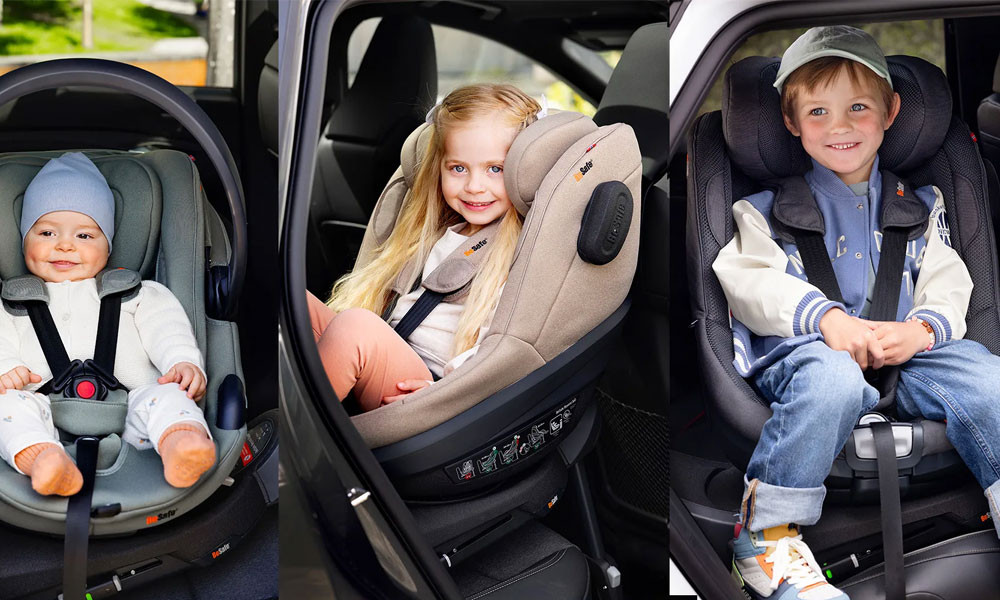
Choosing a car seat is an important part of preparing for life with a baby, but there is another step that is just as essential: making sure it is fitted and used correctly.
Even a car seat that is suitable for your child must be installed according to its manufacturer's instructions. How it is secured in your vehicle, how your child is strapped in and whether the seat is compatible with your car all matter.
For Road Safety Week, we're looking at why correct car seat installation is so important, the common fitting mistakes parents should avoid and the checks to make before setting off on your next journey.
Why is correct car seat installation important?
A child car seat is designed to help protect your child in the event of a collision, but it needs to be fitted and used as intended to provide its designed level of protection.
If a seat is loose, incorrectly secured or installed using the wrong belt route, it may not perform as intended in a crash. Incorrect harness adjustment can also affect how effectively your child is restrained.
The NHS advises parents to follow the car seat manufacturer's fitting instructions carefully and ensure their child is securely strapped in.
The key takeaway is simple: choosing the right car seat is only the first step. It must also be fitted correctly, and your child must be secured properly on every journey.
How to install a child car seat correctly
Every car seat is different, so there is no single set of installation instructions that applies to every model. Always read your car seat's manual alongside your vehicle handbook before fitting the seat.
Here are the key checks to make.
- Check that the car seat is compatible with your vehicle
Before installing a new car seat, confirm that it is approved for use in your particular vehicle and the seating position you intend to use.
Not every car seat fits every car. The shape of your vehicle's seats, seat-belt arrangements, ISOFIX anchor points and other features can affect compatibility.
If you are using an ISOFIX seat, check your vehicle handbook to locate the correct anchor points and confirm that the seat is approved for your car. If the seat uses a support leg, check the instructions for how it must be positioned. Some vehicles have underfloor storage compartments that may affect whether a support leg can be used in that position.
If you are unsure whether a seat will fit correctly, contact the car seat manufacturer or speak to a car seat expert.
- Follow the manufacturer's fitting instructions
Never rely on guesswork when installing a child car seat.
Read the instruction manual carefully and follow the specified fitting method. If the seat is installed using the vehicle's seat belt, make sure the belt passes through the correct guides and is tightened as instructed. Check that it is not twisted.
If your seat uses ISOFIX, follow the manufacturer's instructions for connecting and securing the seat. Check any installation indicators fitted to the seat or base and make sure they show the correct status.
Some seats can be installed using either ISOFIX or a seat belt, while others require a specific method. Never assume you can use an alternative fitting method unless the manufacturer expressly permits it.
If you have misplaced the instruction manual, contact the manufacturer or check its official website for a replacement copy.
- Check that the seat is securely fitted
Once the seat has been installed, check that it is secure according to the manufacturer's instructions.
A seat that is loose or incorrectly fitted may move excessively in a collision. The permitted movement and the way it should be checked depend on the seat and its installation method, so follow the specific guidance for your model.
If the seat does not appear secure, do not assume that tightening it in a different way will solve the problem. Recheck the instructions and contact the manufacturer or a car seat expert if necessary.
For seats installed with a vehicle seat belt, check that the belt is routed correctly, pulled tight and secured using any required locking mechanism.
For ISOFIX seats, check all the required connections and any indicators. If the seat has a support leg or top tether, make sure it is fitted correctly if required by the manufacturer.
- Check the recline angle of a rear-facing seat
For babies and young children travelling rear-facing, the seat needs to be set at the recline angle specified by its manufacturer.
An incorrect angle can affect your child's positioning. Many seats have built-in indicators or adjustment mechanisms to help parents achieve the correct angle.
Do not choose an angle simply because it looks comfortable. Follow the instructions for your particular seat and your child's size.
If you cannot achieve the required angle in your vehicle, check compatibility with the seat and car manufacturers before using it.
- Make sure the harness fits your child correctly
Correct installation is only one part of car seat safety. Your child must also be secured correctly in the seat.
Before each journey, check that:
- The harness straps are not twisted.
- The harness is adjusted according to the manufacturer's instructions for your child's size and the direction they are facing.
- The harness is snug and secure, without unnecessary slack.
- The buckle is fastened correctly.
- Any harness adjustment or tightening mechanism has been used as instructed.
The correct harness position can differ between rear-facing and forward-facing seats, so always check the instructions for your particular model.
For older children using a high-backed booster seat, check that the vehicle's seat belt is positioned as instructed, with the lap belt across the pelvis and the diagonal belt correctly positioned across the shoulder.
Common car seat installation mistakes to avoid
Some fitting errors can be easy to overlook, particularly when parents are busy or moving a seat between vehicles.
Here are some important mistakes to watch out for.
Using the wrong fitting method
Not every seat can be installed in the same way. Using a fitting method that is not approved for your seat can result in an incorrect installation.
Always follow the approved fitting method for your seat and vehicle.
Leaving the harness too loose
A harness that is too loose may not restrain your child as intended in a collision. Check the fit every time you secure your child and adjust it according to the manufacturer's instructions.
Forgetting to check the seat after moving it
If you remove the car seat to clean the vehicle, transfer it to another car or reinstall it for any reason, it must be fitted correctly again.
Never assume that the seat is secure simply because it was fitted properly previously.
Ignoring installation indicators
Some ISOFIX seats and bases include indicators that help show whether the connections or other components have been secured correctly.
Learn what the indicators on your model mean and check them as directed by the manufacturer. Do not rely on an indicator alone if the instructions require additional checks.
Placing a support leg over an unsuitable floor compartment
Some vehicles have underfloor storage compartments that may not support a car seat's support leg as required. This depends on the vehicle and seat combination.
Check both manufacturers' instructions and use only an approved installation arrangement. Do not improvise a solution.
Using a rear-facing seat in front of an active airbag
A rear-facing child car seat must never be used in a front passenger seat with an active airbag. In a collision, an inflating airbag can cause serious injury or death.
If installing a rear-facing seat in the front passenger position, the airbag must be deactivated and the vehicle and car seat manufacturers' instructions followed. The rear seat is generally the preferred place for children to travel.
See the GOV.UK child car seat rules for official safety and legal guidance.
Why rear-facing car seat safety matters
Correct installation is important whichever direction your child's seat faces, but it is also worth considering how long your child can remain rear-facing.
Rear-facing seats help support a young child's head, neck and back in a frontal collision. Because babies and young children are still developing, keeping them rear-facing for longer is recommended wherever their seat's approved limits allow.
Under UK rules for R129 height-based seats, children must travel rear-facing until they are at least 15 months old. However, reaching this minimum age does not mean you need to turn your child forward-facing.
If your baby outgrows their infant carrier, consider a suitable toddler seat that allows them to remain rear-facing for longer.
Always follow the manufacturer's instructions for your child's height or weight, installation and harness adjustment.
Free car seat fittings at Pramworld
Even after reading the instructions, it can be reassuring to have an expert help you with your car seat.
At Pramworld, we have car seat experts in store and offer free car seat fittings, helping parents feel more confident about their little one's safety before heading out on the road.
Whether you're preparing for your newborn's first journey home or choosing a new car seat as your child grows, our team can help with your car seat fitting and answer your questions.
We recommend checking that your chosen car seat is suitable for your vehicle and following the manufacturer's instructions for installation and use.
Need help with your car seat? Visit your local Pramworld store to speak to our car seat experts and take advantage of our free car seat fitting service.
Getting the right seat is important, but making sure it's fitted correctly is just as essential.
Your pre-journey car seat safety checklist
Before setting off, take a moment to check the following:
- The car seat is suitable for your child's current height or weight.
- The seat is approved for your vehicle and the position in which it is installed.
- The seat is secured using the correct fitting method.
- Any required ISOFIX connections, support leg or top tether are correctly fitted.
- The recline angle is correct, where applicable.
- Your child's harness is correctly positioned, fastened and snug.
- Your child's clothing is not preventing the harness from fitting as intended.
- Any applicable airbag requirements have been followed.
- Everyone in the vehicle is wearing their seat belt or using the appropriate restraint.
Keep the manufacturer's instructions accessible so you can refer to them whenever you need to check the installation or adjust the seat.
Frequently asked questions about car seat installation
How do I know if my car seat is installed correctly?
Follow the car seat manufacturer's instructions and check that every required connection, belt route, locking mechanism and indicator is correct. If you are unsure, contact the manufacturer or seek help from a trained car seat fitter.
Is ISOFIX safer than a seat-belt installation?
Both methods can be safe when the seat is approved for that installation method, compatible with the vehicle and fitted correctly. ISOFIX can make installation simpler, but it does not automatically guarantee a correct fit. Always follow the instructions for your specific seat and car.
Can I move my car seat between different cars?
This depends on the car seat and the vehicles involved. Check compatibility with each car and reinstall the seat according to the manufacturer's instructions every time it is moved. Never assume that a seat that fits one car will fit another.
Do I need to check my car seat before every journey?
You should check that your child is correctly secured every time you travel. It is also sensible to check the seat's installation regularly and whenever it has been removed, moved or adjusted.
Can I use a rear-facing car seat in the front passenger seat?
A rear-facing child car seat must not be used in front of an active passenger airbag. If installing one in the front passenger position, the airbag must be deactivated and the vehicle and car seat manufacturers' instructions followed. The rear seat is generally the preferred place for a child to travel.
What should I do if my car seat feels loose?
Do not use it until you have checked the installation. Follow the manufacturer's instructions, confirm that the seat is compatible with your vehicle and seek advice from the manufacturer or a trained fitter if you cannot secure it correctly.
Can Pramworld help me fit my car seat?
Yes! Pramworld has car seat experts in store and offers free car seat fittings. Visit your local store to get help with your car seat and advice on preparing for your next journey.
Small checks make an important difference
Correct car seat installation is an essential part of keeping your little one safe on the road. Choosing a suitable seat, fitting it correctly, adjusting the harness and checking everything regularly all help ensure that your child restraint is used as intended.
This Road Safety Week, take a few minutes to revisit your car seat's instructions and check that everything is fitted correctly. If you have any doubts, seek expert advice rather than guessing.
Need help fitting your car seat? Our in-store car seat experts offer free car seat fittings at Pramworld. Visit us in store for help with your car seat and advice on getting ready for your next journey.
At Pramworld, we believe helping parents understand car seat safety is just as important as helping them choose the right products. Taking the time to get the fit right can make every journey a more reassuring one.