
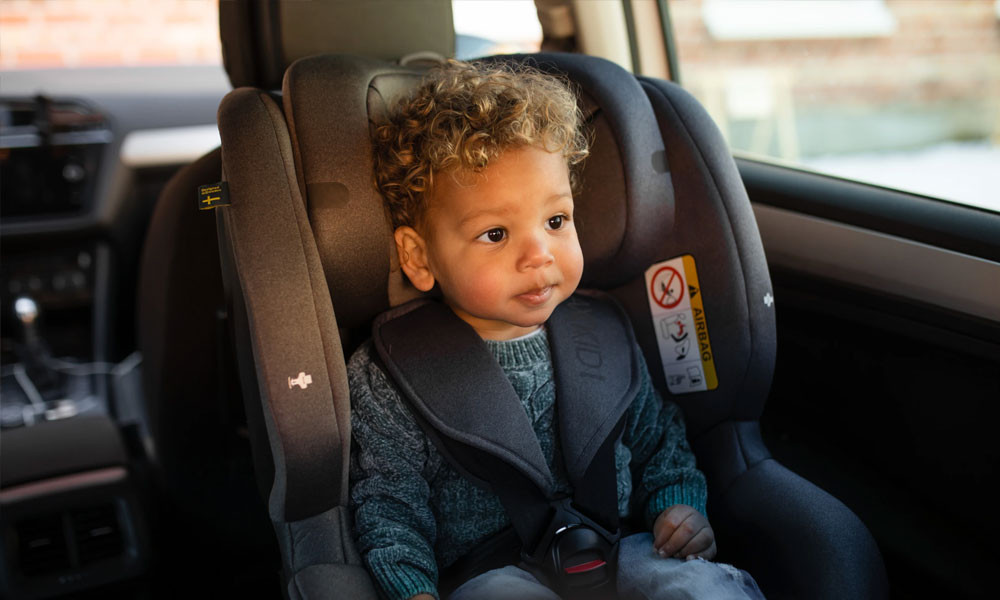
When should your child turn forward-facing in their car seat? It’s a question many parents ask as their little one grows, but the safest approach is to keep your child rear-facing for as long as possible, until they reach the limits of their car seat.
Although UK regulations set a minimum age for rear-facing travel in newer height-based car seats, that doesn't mean your child needs to turn forward-facing as soon as they reach it. Extended rear-facing allows children to benefit from the additional protection of a rear-facing position for longer.
In this guide, we explain how long children should stay rear-facing, why it matters, what the UK law says and how to choose a suitable extended rear-facing car seat.
Rear-Facing Until What Age?
Children should travel rear-facing for as long as possible, ideally until they reach the maximum height or weight limit of their rear-facing car seat. Depending on the seat and your child's growth, this may be around four years old, or six to seven years old with a suitable extended rear-facing model.
There is no single age when every child should turn forward-facing. Different car seats have different height and weight limits, so it's important to follow the instructions for your specific model.
Many standard infant car seats are outgrown during the first year or so, but this doesn't mean your child needs to move straight into a forward-facing seat. A suitable next-stage rear-facing car seat can keep them travelling in this position for much longer.
The key is to choose a seat that is suitable for your child's size, your vehicle and the stage they are at.
What Is Extended Rear-Facing?
Extended rear-facing, often shortened to ERF, means keeping a child in a rear-facing car seat beyond the minimum legal requirement.
Rather than turning a child forward-facing as soon as they are legally allowed to, parents choose a seat designed to accommodate them rear-facing for longer. Depending on the model, these seats can support rear-facing travel to around four, six or even seven years of age.
Extended rear-facing is widely recommended because young children have relatively large heads and developing necks. In a frontal collision, a rear-facing seat supports the head, neck and back against the seat, helping distribute the forces of the impact across a larger area.
In a forward-facing seat, the child's body is restrained while the head moves forward, placing greater strain on the neck. Keeping children rear-facing for longer helps provide additional protection during this important stage of their development.
What Does UK Law Say About Rear-Facing Car Seats?
Under UK regulations, children travelling in an R129 height-based car seat must remain rear-facing until they are over 15 months old. After this point, a suitable forward-facing seat may be used, provided the child meets its requirements.
However, 15 months is the legal minimum for R129 seats, not a recommended target age for turning your child forward-facing. Safety guidance from organisations such as the NHS and RoSPA recommends keeping children rear-facing for as long as they fit their seat.
All children must normally use an appropriate child car seat until they are 12 years old or 135cm tall, whichever comes first.
When choosing or using a car seat, always check its approval label, your child's height and weight, and the manufacturer's instructions. The rules and limits can differ between car seat types.
Why Is Rear-Facing Safer for Longer?
Keeping your child rear-facing for longer offers important safety benefits during their early years.
- Better support for the head and neck
Young children have developing neck muscles and a proportionally larger, heavier head than adults. In a collision, a rear-facing seat supports the child's head, neck and back together, helping reduce the forces placed on the neck.
- Protection in a frontal collision
Frontal collisions are an important consideration when it comes to child passenger safety. In a rear-facing seat, the child's body is supported by the seat shell during the impact, rather than the head moving forwards ahead of the torso.
- Protection as your child grows
A child doesn't suddenly become physically ready to face forwards when they reach 15 months. Their development continues well beyond this age, which is why keeping them rear-facing for longer is recommended whenever the seat allows it.
- More time in a protective position
Choosing an extended rear-facing car seat allows your child to remain in this position beyond the limits of many infant carriers. This gives parents the option to prioritise rear-facing travel for several more years, depending on the seat selected.
When Should You Turn Your Child Forward-Facing?
Our advice is simple: don't rush to turn your child around. Keep them rear-facing until they reach the limits of their particular car seat.
Before making any change, check the following:
- Maximum height: Has your child reached the height limit stated by the car seat manufacturer?
- Maximum weight: Has your child reached the seat's permitted weight limit?
- Head position: Is your child's head within the limits specified in the seat's instructions?
- Seat suitability: Is the seat still appropriate for your child's size and stage of development?
- Vehicle compatibility: Is the seat correctly installed and approved for use in your vehicle?
The exact point at which a seat is outgrown depends on its design and instructions. Don't rely on age alone, and never continue using a seat beyond its stated limits.
If your child is approaching the limit of their current infant carrier, consider moving to a suitable extended rear-facing seat rather than assuming a forward-facing seat is the only next step.
What If My Child's Legs Are Bent or Touch the Vehicle Seat?
One of the most common concerns parents have about extended rear-facing is legroom.
As children grow, their legs may bend, cross or rest against the vehicle seat. This can look uncomfortable to adults, but bent legs alone are not a reason to turn a child forward-facing. Children can find different comfortable positions for their legs while remaining rear-facing.
What matters is that the car seat is being used correctly, your child is within its permitted limits, and the manufacturer's instructions are followed. If you are concerned about your child's position or comfort, ask a qualified car seat specialist to check the setup.
How Do You Choose an Extended Rear-Facing Car Seat?
Extended rear-facing seats are available with different installation methods, size limits and features. The best option is one that fits your child, your vehicle and your family's everyday needs.
When comparing seats, consider:
- Height and weight limits: Choose a seat that allows your child to remain rear-facing for as long as possible.
- Vehicle compatibility: Check that the seat is approved for your specific car and can be installed correctly.
- Installation method: Depending on the model, installation may use ISOFIX or the vehicle's seat belt. Follow the manufacturer's instructions carefully.
- Legroom and adjustability: Look for a design that can accommodate your growing child.
- Ease of everyday use: Consider how easy it is to secure your child, adjust the harness and use the seat correctly on every journey.
- Independent safety testing: Check the seat's approval and any additional safety testing claimed for the exact model.
Some extended rear-facing seats are designed to keep children rear-facing to approximately 125cm or around six to seven years old, depending on the individual child's size and the seat's limits. Always check the precise specifications rather than relying on an approximate age.
At Pramworld, we stock a selection of car seats, including extended rear-facing options from Axkid. Explore our Axkid car seats to find out more.
Frequently Asked Questions About Extended Rear-Facing
Is 15 months too young to turn a child forward-facing?
Although an R129 height-based seat permits forward-facing travel once a child is over 15 months old and meets the seat's requirements, this is the legal minimum rather than the recommended target. Keeping your child rear-facing for as long as possible offers better protection for their head, neck and spine.
Should my child stay rear-facing until four years old?
Keeping children rear-facing until at least four years old is a useful goal, provided they are using a suitable seat within its limits. An extended rear-facing seat may allow them to remain rear-facing for longer.
Can my three-year-old still sit rear-facing?
Yes. Many extended rear-facing car seats are designed to accommodate children well beyond three years old. Check the seat's maximum height and weight limits and ensure it is suitable for your child and vehicle.
Can a child remain rear-facing until six or seven years old?
Yes, if you choose a suitable seat designed for extended rear-facing and your child remains within its permitted limits. Some models accommodate children to approximately 125cm or around six to seven years old, although the exact limits vary.
Is it unsafe if my child's legs touch the vehicle seat?
Not necessarily. Bent legs or feet touching the vehicle seat are not, on their own, a reason to turn your child forward-facing. Always follow the car seat manufacturer's guidance on fit, positioning and permitted use.
What should I do when my child outgrows their infant car seat?
You don't automatically need to move to a forward-facing seat. Consider a suitable next-stage rear-facing car seat, checking the height and weight limits, your child's needs and compatibility with your vehicle.
Does an extended rear-facing car seat fit every car?
No. Compatibility varies between vehicles and seat models. Always check the manufacturer's vehicle compatibility information and installation instructions before purchasing.
Final Thoughts: Keep Your Child Rear-Facing for as Long as Possible
So, rear-facing until what age? As long as your child fits safely within the limits of their car seat.
While the UK legal minimum for rear-facing in an R129 height-based seat is until a child is over 15 months old, there is no need to turn them forward-facing at that point. A suitable extended rear-facing car seat can allow them to benefit from this more protective position for several additional years.
At Pramworld, we encourage parents to look beyond the minimum legal requirement and consider how long their child can safely remain rear-facing. Choose a seat that suits your child's size, check it is compatible with your vehicle, and always follow the manufacturer's instructions.
When it comes to your child's safety, there's no need to rush the move to forward-facing.