
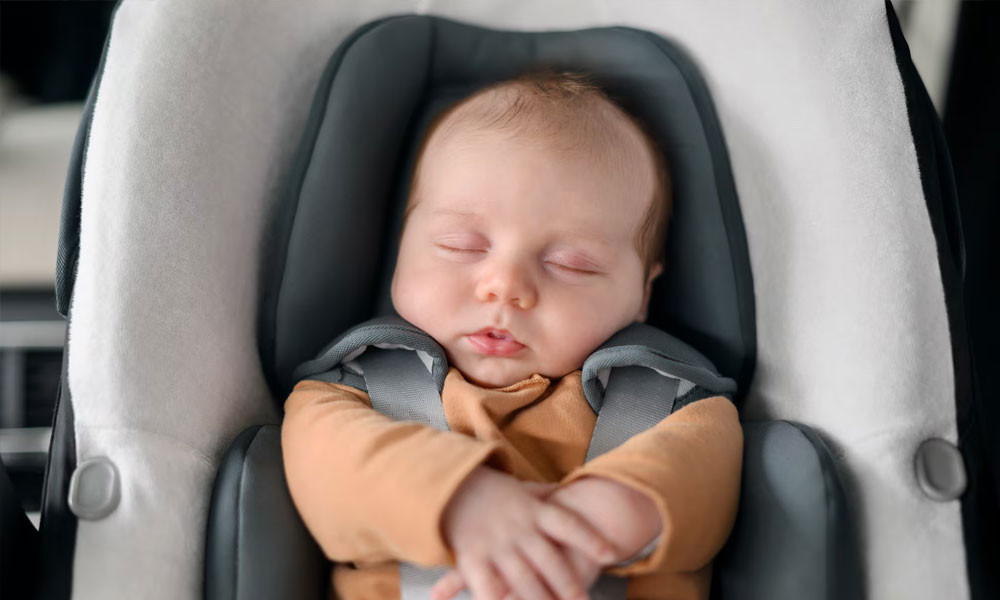
Car seats are an essential part of travelling safely with your baby, but they are designed for travel rather than sleep. So, how long can your baby stay in their car seat, and what should you consider when you're planning a longer journey?
How long can a baby stay in a car seat?
There is no published evidence that sets out a specific maximum amount of time a baby can spend in a car seat while travelling.
However, the Lullaby Trust advises that infant healthcare professionals, safety experts and most car manufacturers recommend that babies should not be in a car seat for longer than 2 hours at a time and should be taken out regularly.
If you're travelling for a longer period, plan regular breaks so you can take your baby out of their car seat and give them an opportunity to stretch and move around.
The 2-hour recommendation should be treated as guidance for taking regular breaks, rather than as a guaranteed safe limit for every baby.
Why are regular breaks important?
Babies, particularly very young babies, can be vulnerable to changes in position while sitting in a car seat.
If your baby changes position and slumps forwards, stop the car as soon as it is safe to do so. Take your baby out of the car seat and reposition them before continuing your journey.
The Lullaby Trust also advises avoiding long-distance journeys with pre-term and young babies where possible. Research has found that pre-term and young babies may be at risk of breathing difficulties when travelling in an upright position in a car seat for a prolonged period.
If you are planning a longer journey with a young or premature baby, speak to your healthcare professional if you have any concerns.
Can my baby sleep in their car seat?
It is normal for babies to fall asleep during a car journey, and the Lullaby Trust says it is okay for your baby to fall asleep in their car seat for a short amount of time while travelling.
However, a car seat should not be used as your baby's main sleeping space.
When you arrive at your destination, take your baby out of the car seat and place them on a firm, flat surface to sleep, such as a cot or Moses basket. The NHS gives the same advice, stating that babies should be taken out of their car seat as soon as you reach your destination.
How should my baby travel in a car seat?
Always make sure your baby's car seat:
- Is suitable for your baby's current height or weight.
- Is correctly fitted according to the manufacturer's instructions.
- Is securely fastened every time your baby travels.
- Is used in the appropriate rear-facing position for your baby's stage and seat.
The NHS recommends using a rear-facing car seat for as long as your child fits into it, as rear-facing seats provide better protection in a crash.
If you are unsure whether your car seat is suitable for your baby or whether it has been fitted correctly, seek advice from a trained car seat specialist or the manufacturer.
What should my baby wear in their car seat?
It's important that your baby does not become too hot while travelling.
The Lullaby Trust advises removing outdoor clothing such as coats and snowsuits once your baby is in the car. Bulky clothing can also affect how securely the harness fits.
Instead, dress your baby in suitable layers and check their tummy or the back of their neck. If they feel hot, clammy or sweaty, remove a layer.
What should I do on a long car journey?
If you need to make a longer journey with your baby:
- Plan regular breaks.
- Take your baby out of their car seat during breaks and allow them to stretch and move.
- Check your baby regularly.
- If possible, have another adult sit in the back with your baby.
- If you're travelling alone, consider using a suitable mirror so you can keep an eye on your baby.
- If your baby slumps forwards or changes position, stop as soon as it is safe and reposition them.
- Take your baby out of their car seat when you arrive at your destination, even if they have fallen asleep.
The key takeaway
There isn't a single evidence-based maximum amount of time that applies to every baby in every car journey. However, regular breaks are important, and the Lullaby Trust notes that infant healthcare professionals, safety experts and most car manufacturers recommend that babies should not remain in a car seat for more than 2 hours at a time.
Most importantly, car seats are designed for safe travel, not as a sleeping space. If your baby falls asleep during the journey, take them out of their car seat when you reach your destination and place them on a firm, flat sleep surface.
If you have any concerns about travelling with your baby, particularly if they were born prematurely or are very young, speak to your midwife, health visitor or GP for individual advice.