
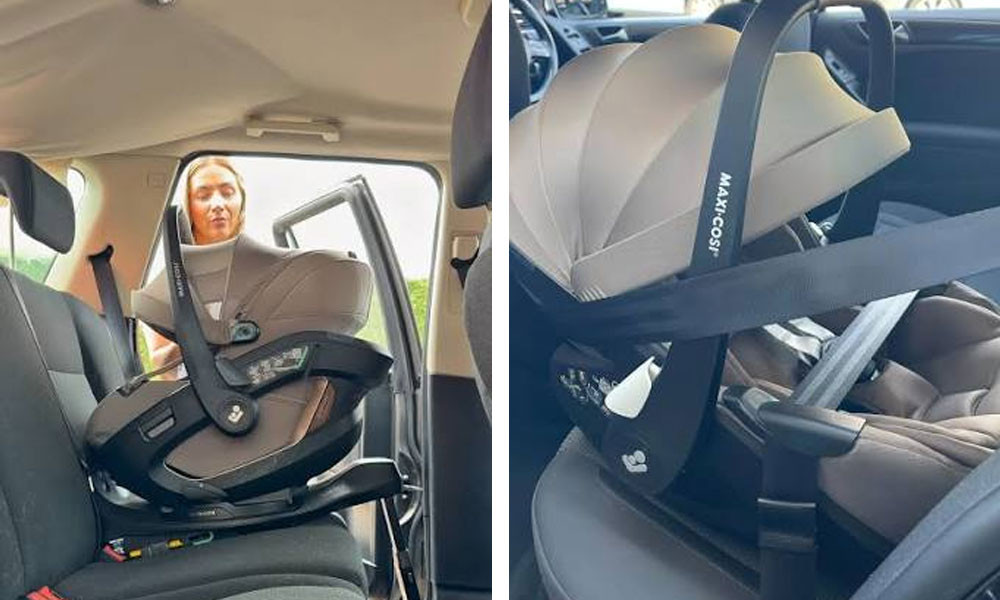
Bringing your newborn home or preparing for your first journey with your baby involves lots of new things to learn, and fitting an infant carrier correctly is one of the most important.
Many infant carriers can be installed using a vehicle's seat belt, while others require a compatible car seat base or offer more than one approved installation method. Knowing which method your particular car seat supports is essential before travelling with your baby.
In this guide, we explain how to approach seat-belt installation safely, what to check before setting off and where to find the correct instructions for your infant carrier.
Can you fit an infant carrier using a seat belt?
Yes, some infant carriers can be installed directly using a vehicle's seat belt, without an ISOFIX base. However, this depends on the specific car seat model and the installation methods approved by its manufacturer.
Some infant carriers can be secured using either a compatible base or a seat belt, while others are designed to be used with a particular base.
Before installing your infant carrier, check the instruction manual to confirm that seat-belt installation is permitted and identify the correct method for your model. You should also consult your vehicle handbook to check that the seat can be fitted safely in your chosen seating position.
Never assume that an infant carrier can be installed using a seat belt simply because it fits on the vehicle seat.
How to fit an infant carrier using a seat belt
The exact fitting process varies between car seat models, so the instructions supplied with your particular infant carrier must always take priority over general advice.
The following checks will help you understand what to look for when preparing to install a seat-belt-compatible infant carrier.
Step 1: Check that your infant carrier is suitable for seat-belt installation
First, read your infant carrier's instruction manual and check which installation methods the manufacturer permits.
Confirm whether your carrier can be installed directly using the vehicle's seat belt or whether it requires a compatible base. If a base is needed, check the manufacturer's instructions to identify which base is approved for your particular model.
You should also check that the infant carrier is suitable for your baby's current height and weight and compatible with your vehicle.
If you cannot find the instructions, contact the car seat manufacturer before attempting installation.
Step 2: Choose a suitable seating position
The rear seat is generally the safest place for a child car seat, provided the seat can be fitted correctly in that position.
Check your vehicle handbook and the car seat manufacturer's instructions before choosing where to install the carrier. The vehicle's seat shape, seat-belt arrangement and other features can affect whether a particular car seat can be fitted safely.
A rear-facing infant carrier must never be installed in a front passenger seat protected by an active frontal airbag. The airbag must be deactivated before a rear-facing seat is fitted in that position, in accordance with the vehicle manufacturer's instructions.
For more information, see the GOV.UK child car seat rules.
Step 3: Position the infant carrier as instructed
Position the carrier on the vehicle seat in the rear-facing orientation specified by its manufacturer.
Check the carrier's recline angle and any built-in angle indicators. Correct positioning is particularly important for newborns because their head and body need to be supported in a way that helps maintain an open airway.
Do not place towels, blankets or other objects underneath the carrier to alter its angle unless the car seat manufacturer specifically permits this.
If the carrier does not sit correctly on the vehicle seat, stop and check the instructions and vehicle compatibility information before continuing.
Step 4: Route the seat belt through the designated belt guides
This is one of the most important parts of seat-belt installation.
Use only the belt path identified in the instruction manual for your exact infant carrier. Follow the manufacturer's illustrations to establish where the lap and diagonal sections of the seat belt must pass.
Some infant carriers use clearly marked belt guides, but their positions and the approved routing can differ between models.
Make sure the seat belt is not twisted and that it passes through every required guide. Fasten the buckle as directed and use any built-in belt-locking or tensioning mechanism if the manufacturer specifies one.
Never guess the belt route or copy the fitting method from another car seat. Incorrect routing can prevent the carrier from being secured as intended.
Step 5: Tighten and secure the seat belt
Follow the manufacturer's instructions to remove slack from the seat belt and secure the carrier.
Some models have a belt-tensioning device or a lock-off mechanism. Others have different instructions for tightening and securing the belt. Use only the method approved for your particular seat.
Once installed, check the carrier's movement in the location and manner specified by the manufacturer. Do not rely on a generic movement test alone to determine whether a seat is fitted correctly.
If the carrier remains loose, tilts unexpectedly or cannot be secured as instructed, do not travel with your baby in it until the problem has been resolved.
Step 6: Check the installation before travelling
Before placing your baby in the carrier, check the installation against the manufacturer's instructions.
Confirm that:
- The carrier is installed in the correct rear-facing position.
- The seat belt follows the approved route and is not twisted.
- The seat belt is secured and tightened as instructed.
- Any required belt-locking or tensioning mechanism is correctly engaged.
- The carrier's recline angle and position are correct.
- The carrier is compatible with the vehicle and seating position.
If you are unsure whether the installation is correct, ask the car seat manufacturer or a suitably trained child car seat fitting professional for help.
How to secure your baby in the infant carrier
Correctly installing the carrier is only part of keeping your baby safe. Your baby must also be secured in the seat according to the manufacturer's instructions.
Before travelling:
- Place your baby in the carrier in the position shown in the manual.
- Check that the harness straps lie flat and are not twisted.
- Position and tighten the harness as directed by the manufacturer.
- Check that the harness and buckle are fastened correctly.
- Avoid bulky clothing that could prevent the harness from fitting snugly. Secure your baby first, then use a suitable blanket over the harness if needed.
- Use only the inserts and accessories approved for your specific car seat.
Do not add extra padding or head supports unless they are approved by the car seat manufacturer.
For newborns, make sure the carrier is adjusted for your baby's size and the correct recline angle is maintained.
Common mistakes to avoid when fitting an infant carrier
Even a suitable car seat can offer less protection if it is not installed or used correctly. Be careful to avoid these common mistakes.
Using the wrong belt route: The seat belt must follow the exact route specified for your carrier. Never improvise or use the route from another model.
Leaving slack in the seat belt: Follow the manufacturer's instructions to tighten and secure the belt properly.
Assuming every infant carrier can be fitted without a base: Some models permit direct seat-belt installation, while others require a compatible base. Always check first.
Ignoring the recline angle: A carrier that is positioned incorrectly may not support a newborn's head and airway as intended.
Using an incompatible seating position: Check the vehicle handbook and the car seat manufacturer's compatibility guidance.
Fitting a rear-facing carrier in front of an active airbag: This is dangerous and illegal in the UK.
Assuming the carrier is safe because it feels secure: A proper installation must meet the manufacturer's instructions, not simply feel stable.
Is a seat-belt installation as safe as using an ISOFIX base?
An infant carrier can be installed safely using a seat belt when the manufacturer approves that installation method and it is fitted correctly.
An approved ISOFIX base can make everyday installation more convenient, and some bases include indicators that help confirm whether particular connections have been made correctly. However, a base must also be compatible with the carrier and vehicle and installed according to its instructions.
Neither method should be assumed to be safer in every situation simply because of how it attaches to the car. The correct choice depends on the specific seat, the approved installation methods and whether the installation can be completed properly every time.
If you are choosing an infant carrier, consider how you will use it, whether you need to move it between vehicles and which installation options are available for your car.
When should you ask for help with car seat fitting?
If you cannot follow the instructions confidently, the carrier does not appear to fit correctly or you are unsure about compatibility, seek advice before travelling.
A child car seat fitting professional can help you check the installation and explain the correct procedure for your particular model.
At Pramworld, our in-store car seat experts can help you explore your options and our free car seat fitting service can help you check that your chosen seat is fitted correctly. Contact your local showroom to discuss availability and arrange assistance.
Frequently asked questions
Can I use a seat belt instead of an ISOFIX base?
Some infant carriers are approved for direct seat-belt installation, while others require a compatible base. Check your particular model's instructions before choosing an installation method.
Do all infant carriers use the same seat-belt route?
No. Belt routes and installation requirements vary between models. Always follow the instructions and belt guides provided for your specific infant carrier.
Can I fit a rear-facing infant carrier in the front seat?
A rear-facing infant carrier must not be fitted in a front passenger seat protected by an active frontal airbag. The safest place for a child car seat is generally the rear of the vehicle, provided it can be fitted correctly.
How do I know if my infant carrier is fitted securely?
Follow the installation checks specified in the manufacturer's manual, including the correct belt route, tensioning method, recline angle and any required indicators. If you are unsure, ask the manufacturer or a trained fitting professional to check it.
What should I do if my infant carrier moves after installation?
Check the manufacturer's instructions to assess the installation correctly. If the carrier cannot be secured as directed, do not use it until you have identified and resolved the problem with help from the car seat manufacturer or a suitably trained fitting professional.
Keeping your baby safe on every journey
Correctly fitting and using an infant carrier is an essential part of child passenger safety. Always check that your chosen carrier is suitable for your baby and vehicle, follow the manufacturer's instructions carefully and check the installation before travelling.
If you need help choosing an infant carrier or checking how it fits your car, the Pramworld team can help you explore your options and access our car seat fitting service.
Important safety note: This article provides general information only. It cannot replace the instructions supplied with your specific infant carrier and vehicle. Always follow both manufacturers' instructions and seek professional help if you are unsure about any part of the installation.